Hotels & Hospitality · Completed
W Hotel Sydney
Darling Harbour, Sydney NSW
The W Hotel Sydney sits within the sculptural Ribbon building at Darling Harbour, a landmark hospitality address on the harbour. The architecture is the drawcard as much as the rooms, which places every visible finish under scrutiny from the moment the doors open.
Hotels and hospitality sit apart from other sectors at handover. A single building has to carry architectural finishes, extensive glazing, painted interior and exterior surfaces, and back-of-house metalwork, all to a standard that reads as premium to the first guest through the door. There is no soft opening for the finishes. Whatever the eye lands on in the lobby, the rooms and the public areas has to be right, and it has to stay right through the opening period and the defects liability window that follows.
The project
What it is
The project is the finishing and rectification scope on a hospitality building where the facade form and the interior fit-out both carry a high visual standard. Defects are ordinary on any build this scale; the challenge is that they land on surfaces a guest sees at close range: glazing, painted finishes and the stone, tile and metal of bathrooms, lobbies and public areas.
The specific difficulty is that the obvious fix is usually the wrong one. Replacing a scratched or hard-water-stained pane, stripping and re-coating a marked surface, or swapping out chipped stone all mean lead time, trade coordination and disturbance to work that is otherwise complete. On a hotel running towards an opening date, that kind of replacement work is precisely what the programme cannot absorb, and it tends to arrive late, once the following trades have already caused the damage and moved on.
That is the gap this scope was set up to close: a body of finishing and rectification work spanning glass, coatings and hard surfaces, delivered under one engagement rather than parcelled out across separate specialists who each need managing, sequencing and chasing through close-out.
Our scope
What M&M delivered
M&M delivered three documented scopes on the building: surface restoration, industrial and architectural coatings, and glass polishing. Each of these is a restore-in-place discipline rather than a replacement service, which is the point of engaging them together.
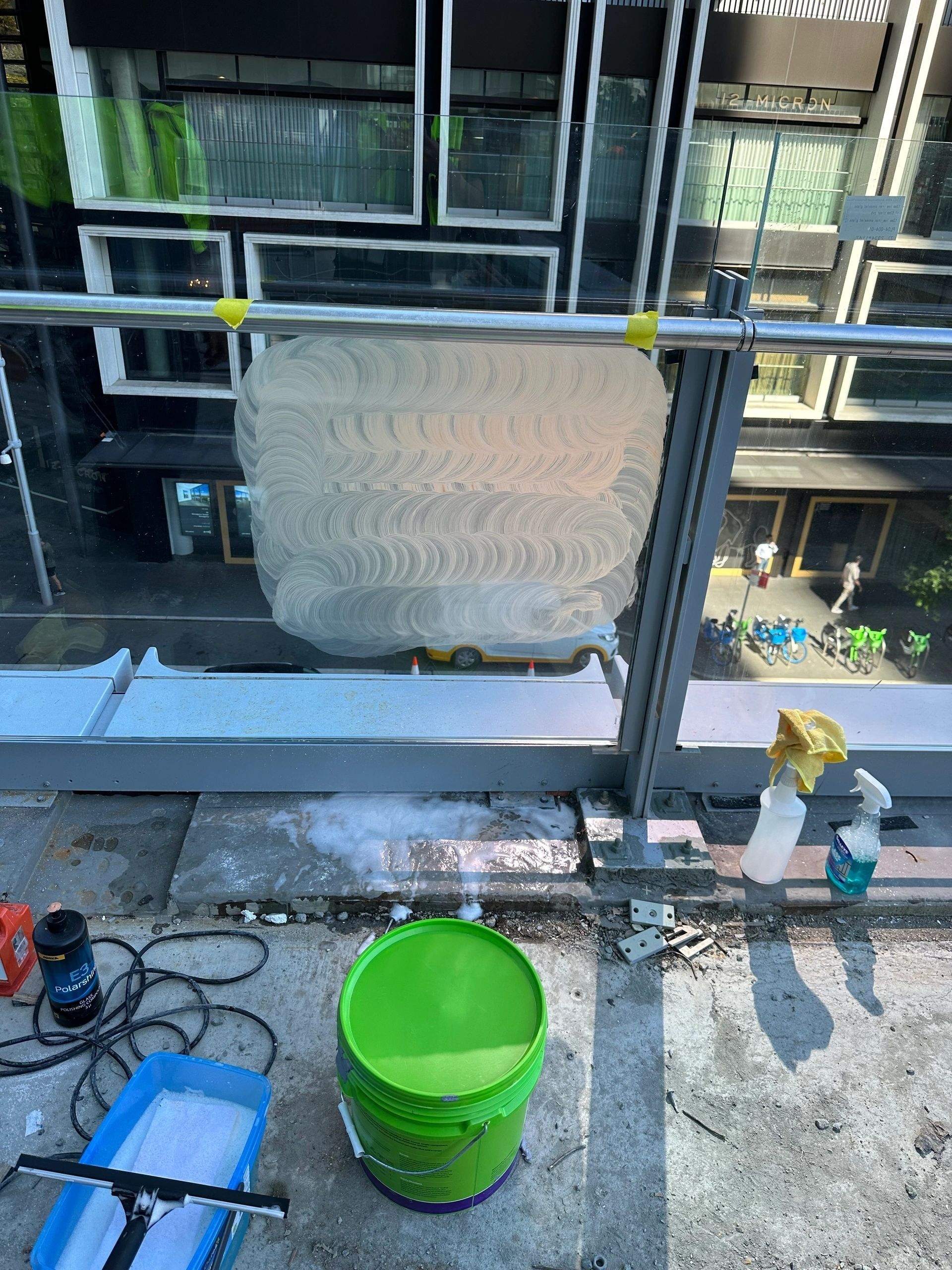
The glass scratch repair and polishing work restores glazing marred by scratches and hard-water staining, with each restoration matched to the type and depth of damage rather than run as a single fixed process. The coatings scope covers interior and exterior painting across the range of substrates a hotel presents, from drywall and timber to metal and masonry, applied by roll, brush and spray as the surface and setting require, and extending to industrial and architectural coating systems where a harder-wearing finish is called for. The surface restoration scope handles the hard finishes that make up bathrooms and public areas, including chipped stone, tile, scratched baths and sinks, mirrors and chrome.
Across all three, the work runs the way M&M's rectification always does: one coordinated team of trained trades working under quality-control managers, with onsite colour matching taken to the actual finish before any broad application, and inspection and test plan documentation plus time-stamped photographs kept as the job proceeds. The scope is carried as a single bundled engagement, so the builder deals with one point of accountability across glass, coatings and surfaces rather than three separate specialists.
The value
Why it matters
A hotel opens once. Glass and finish defects visible to the first guest read straight onto the operator's brand, in a building whose whole proposition is how it looks and feels. Restoring those finishes in place, to the standard the room was specified to, is what lets the opening date hold instead of slipping behind a queue of replacement orders.
For the builder, the commercial logic sits underneath the finish. Replacing glazing on a sculptural facade, or re-ordering stone and joinery late in the programme, is slow and expensive, and it disturbs work that is already signed off. Rectifying the panel, the surface or the pane keeps the replacement cost out of the budget and keeps the following trades out of areas that were meant to be closed. Bundling glass, coatings and surface work under one engagement removes the coordination load of running several finishing specialists against the same handover window.
The documentation carries its own weight at handover. Inspection and test plans with time-stamped photographs give the head contractor a complete, traceable record of the condition of each finish and the work done to it. That is audit-ready quality assurance heading into the defects liability period, when the same team that restored the finishes can stand behind them.
Services on this project
Projects in safe hands