
Protection & labour
Protect the finish before the next trade damages it
The cheapest rectification is the one you never need. We protect valuable installed finishes through every build stage — customised to the job — backed by a labour team that keeps your programme moving.
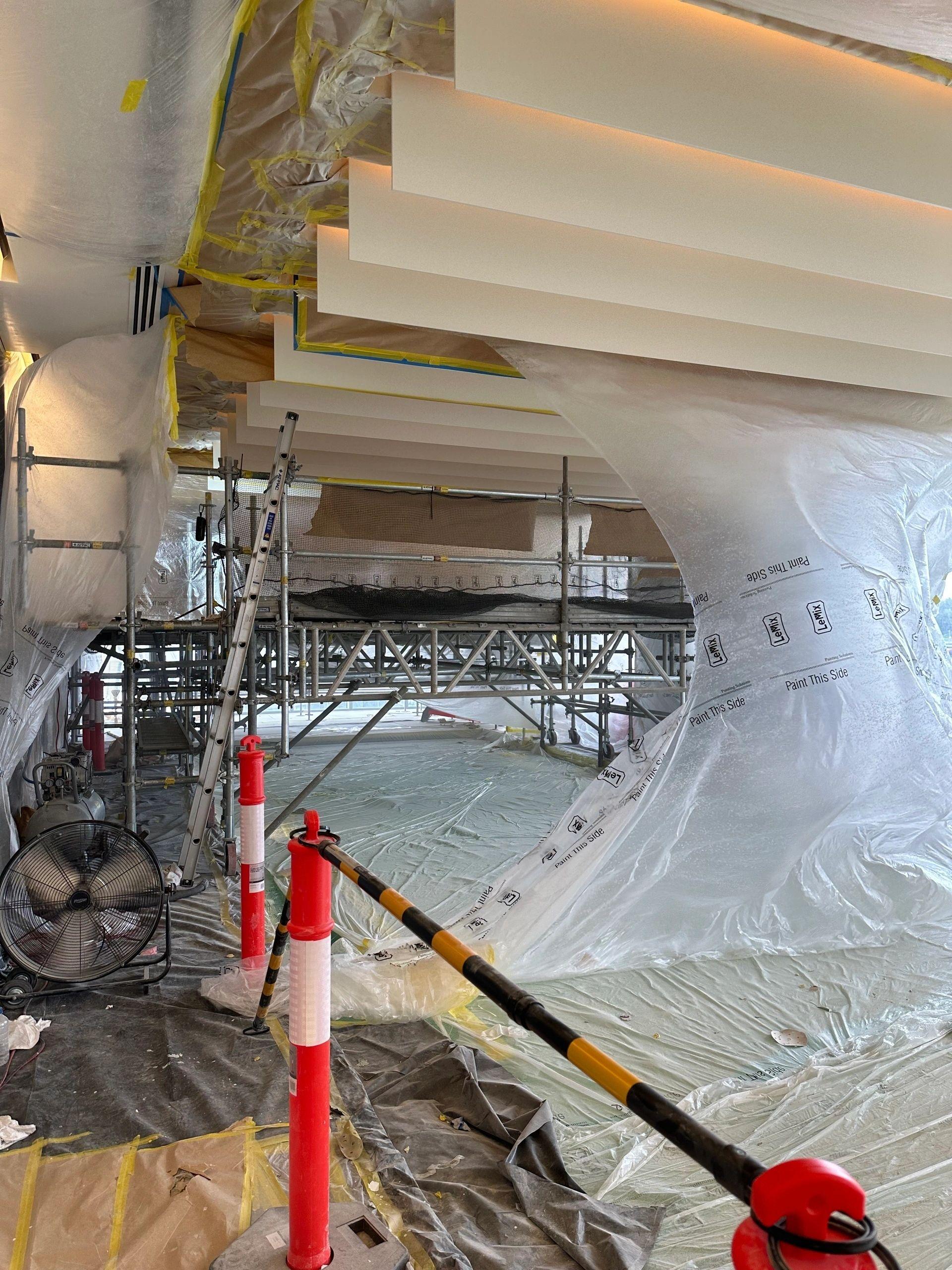
What it is
The scope, done right
Every finish you install is exposed the moment the next trade arrives. Surface protection secures completed work — floors, glazing, facade metals, joinery, stone and sanitaryware — through every stage of the build, so the value already paid for reaches practical completion intact rather than landing on the defect register as make-good.
Surface protection is the discipline of keeping completed finishes out of harm's way while the build carries on around them. On a tier-1 or tier-2 project, expensive finishes are installed long before practical completion — a stone lobby floor, a polished lift core, glazed balustrades, joinery, tiling and sanitaryware all sit exposed for weeks or months while wet trades, fit-out, services and constant material movement continue in the same space. M&M supplies customised protection products and services crafted for the construction industry, working with the builder to cover, board and screen those finishes and to maintain that protection until the risk has passed.
At handover it shows up as a defect register filling with chipped stone, scratched glass, gouged floorboards, scuffed powdercoat and marked metal — most of it caused by following trades, none of it anyone will readily own. Each line is programme risk, because it has to be made good before sign-off, and each adds to the make-good and coordination load at the worst possible time. Protecting a finish up front is cheaper than rectifying it, and far cheaper than replacing it once lead-time on a reorder is added. The defect you prevent never reaches the register at all.
The finishes involved each fail in their own way, so protection has to suit the substrate and the stage. Powdercoat, anodised and mill-finish metals scuff and scratch under foot traffic and dropped tools; glass and mirrors mark from grinding dust, over-spray and hard water; natural stone chips at exposed edges and arrises; timber floors gouge and dent; sanitaryware and chrome scratch during the trades that follow. A single blanket product rarely fits all of them — reveals and edges need corner protection, traffic paths need boarded floor protection, and vulnerable glazed or polished surfaces need coverings that come off cleanly without leaving residue or adhesive marks of their own.
M&M approaches the work survey-first. The site is walked to identify which finishes are vulnerable and when, protection is matched to each substrate and to the build programme, and the setup is installed as finishes are completed rather than as an afterthought. Protection is inspected, repaired and reinstated as trades progress, then removed at the right stage before handover. The condition of the finish is recorded with time-stamped images at both install and removal, giving you a clear before-and-after record of each protected surface — the calm standard of a team that documents its work as a matter of course.
Behind the protection is a dedicated labour team: detailed clean-ups, general construction assistance, skilled labour, material handling and organised logistics, working day and night shifts with the ability to surge labour to hold the programme. That means protection can be installed, maintained and stripped around your sequence rather than dictating it, and clean-downs and site tasks that would otherwise fall to your own crews are absorbed into the same scope.
Because M&M delivers multi-trade finishing and rectification services under a single subcontract, the crew that protects a finish is also the crew that can make it good if something still gets through — colour-matched on site before any mass application, across facade metals, glass, stone, joinery and floors. A damaged finish becomes one closed item handled by one accountable trade, not a coordination exercise across five subcontractors each pointing at the other.
Protection matters most where finishes are most exposed — finished commercial lobbies among them. And if a finish does get damaged, the same team rectifies what protection misses — see the projects our crews work on.
What's included
Everything this scope covers
- Site survey and a protection schedule mapped by finish type and build stage
- Customised protection products and setups crafted for the installation, not a single blanket product
- Floor, stair and threshold protection along traffic and material-handling paths
- Protection of installed facade panels, glazing and metal finishes
- Protection of joinery, stone, tiling, mirrors and sanitaryware
- Corner and edge protection to vulnerable reveals, arrises and trims
- Time-stamped photographic records at protection install and at removal
- Staged install, maintenance and removal aligned to the programme
- Detailed clean-ups and general construction assistance
- Material handling and site logistics to minimise downtime
- Day and night shifts and surge labour to hold the programme
- Colour-matched make-good of any finish damaged, under the same subcontract
What this fixes
The handover risks this scope removes
The replacement bill you never see
A scratched glass panel or chipped stone benchtop that has to be reordered carries both cost and lead-time the programme cannot spare. Protecting the finish while trades work around it removes the reorder before it starts.
A defect register that swells at handover
Damage from following trades accumulates quietly and all lands at once as make-good, threatening sign-off and retentions. Prevented damage never reaches the register, so the close-out list stays short.
No record of a finish's condition through the build
Without a record, make-good is guesswork. Time-stamped images at protection install and removal capture the condition of the finish at each stage, giving you a complete, traceable history of every protected surface.
Coordinating protection across a dozen subcontractors
Leaving each trade to protect its own work means gaps and inconsistent standards. One team protecting the finishes — and rectifying them if needed — removes that coordination load from your site team.
How we do it
A documented method, every time
Survey and risk assessment
Walk the works with the builder, identify which completed finishes are exposed and when, and map the vulnerable surfaces and traffic paths against the construction programme.
Protection method statement and ITP
Document the protection products, coverage, hold points and responsibilities for each finish and stage, so what gets protected — and who reinstates it — is agreed and recorded before work starts.
Install protection, day or night
Apply the protection as each finish is completed rather than after the fact, working day and night shifts around the sequence, and record the condition with time-stamped images at install.
Monitor and maintain through the build
Inspect protection as trades progress, repair or reinstate anything disturbed, and keep vulnerable finishes covered right through the higher-risk wet-trade and fit-out stages.
Remove and inspect
Strip the protection at the correct stage before handover, time-stamped on removal, and inspect the finish jointly so its condition at hand-back is documented and agreed.
Rectify and sign off
Make good anything that was damaged despite the protection — colour-matched on site under the same subcontract — close the item and hand over the photographic record.
Why it holds up
Evidence, not assurances
Customised to the finish and the stage
Protection products and setups are crafted for the specific installation and build stage, not a single blanket product applied everywhere regardless of substrate or risk.
Prevent and rectify under one subcontract
The crew that protects a finish is the crew that can make it good if it is still damaged — multi-trade finishing and rectification under a single subcontract, one point of accountability.
Documentation as standard practice
Time-stamped images at install and removal, with live project records available to the client, capture the condition of each finish at every stage as a matter of course.
Labour that surges to your date
A dedicated labour team working day and night shifts, with the ability to increase labour at any point, so protection is installed, maintained and stripped around your programme — backed by 90+ skilled staff.
Colour-matched make-good
If a finish is damaged despite protection, it is rectified and colour-matched on site before any mass application, across metals, glass, stone, joinery and floors.
Coverage across Australia
Delivered across Australia from an established multi-trade base with a spray booth and workshop, and project-specific trained tradespeople under quality-control managers.
Service areas
Popular areas for surface protection
Start with a local scope page, or send us the site address and we will confirm coverage.
Questions
What builders ask us
Projects in safe hands