
Glass
Scratched or stained glass, restored — not re-ordered
Scratched or hard-water-stained glass fails inspection, and a full panel replacement is the slow, expensive default. We restore the glass in place — each job tailored to the damage — to save the programme and the reorder.
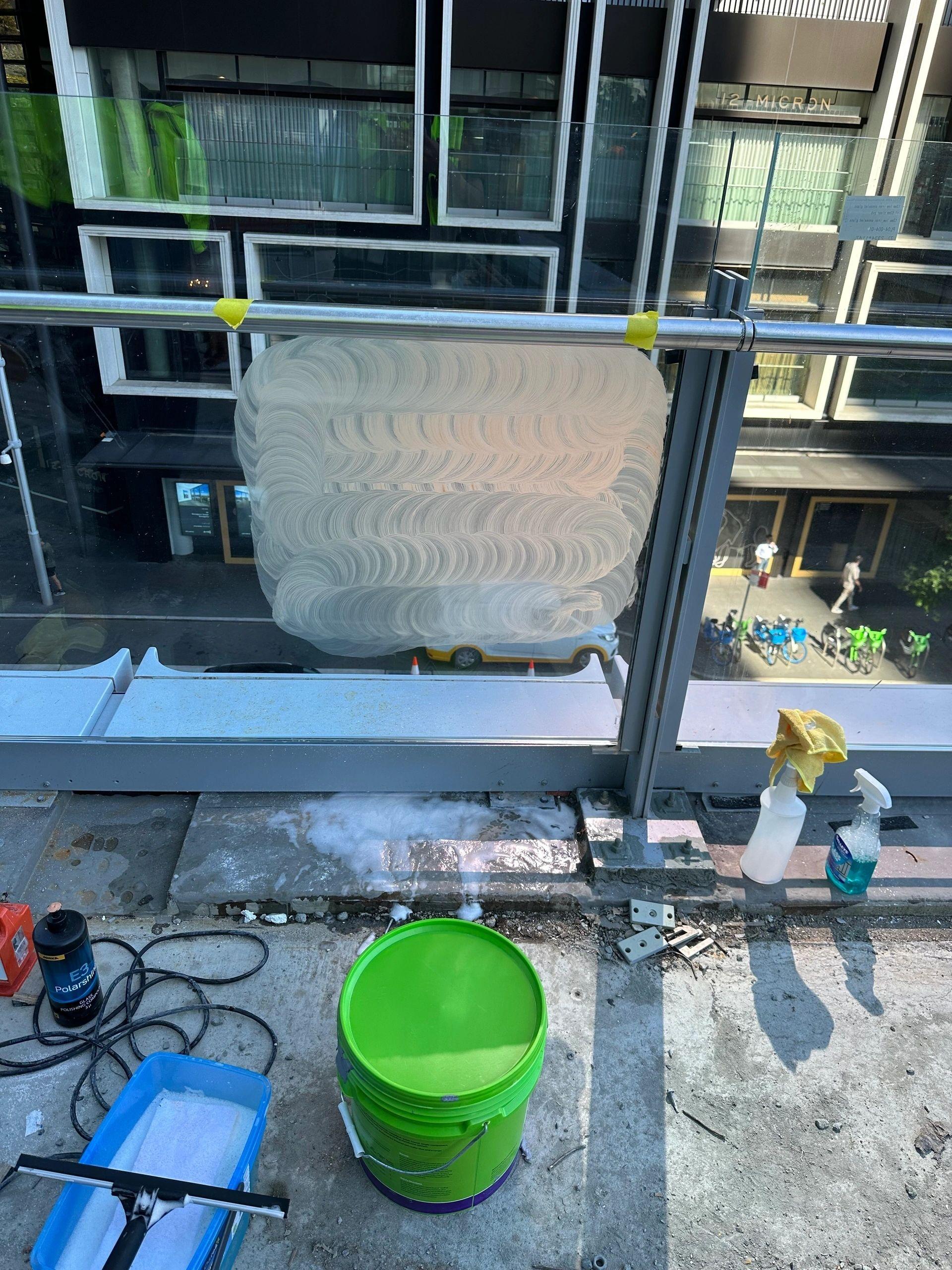
What it is
The scope, done right
Scratched or hard-water-stained glass fails handover inspection, and a made-to-order replacement pane is the slow, expensive default. M&M restores the glass in place — each job worked to the specific damage — so the defect closes without the reorder, the crane time or the disturbed perimeter seal. Delivered across Australia with day and night shifts.
M&M restores glass that has been marred by hard-water staining and scratches, on site and in place. Each restoration is worked to the specific damage, bringing the pane back without lifting it out of the frame. The work sits at the tail of the programme, when the glazing is in, the defect register is being closed and a scratched shopfront or stained balustrade is the item standing between you and sign-off.
Most of this damage is caused by others, late, and after the glass is captured. Mineral and hard-water staining builds up where render wash, concrete or cutting slurry, and wind-driven site water pool on the pane and dry off; left long enough, alkaline runoff begins to etch the surface. Scratches arrive from following trades — scrapers and blades used to clean off overspray and stickers, grinding swarf and weld spatter that pits the surface, and careless dry-wiping of gritty glass. By the time it is spotted, the panel is installed, the access is gone and the trade responsible has usually moved on.
Replacement is the painful default because architectural glass is not a stock item. Insulated glass units (IGUs) and large facade panes are made to order, so you are exposed to fabrication lead-time, matching the exact tint, coating and any ceramic frit, and re-mobilising crane or hoist access. Pulling a captured pane also means disturbing gaskets, glazing tape and the perimeter weather seal — which then has to be re-sealed and re-inspected as its own defect. Restoring the glass in situ avoids the lot.
Glass type governs what is possible, so assessment comes first. Annealed, heat-strengthened, toughened and laminated glass all behave differently under restoration, and coated glass — low-E and other soft or hard coatings, usually on an inner surface of an IGU but sometimes exposed — and ceramic-frit spandrel panels need to be identified before anyone touches them. Shallow surface scratches and mineral staining are typically restorable; a deep scratch that catches a fingernail can reach a point where restoration is not the right call. We tell you that at survey, not after you have paid to find out.
Because M&M delivers its finishing and rectification trades as one services group, glass restoration rarely travels alone. The same engagement can pick up the scratched chrome, the stained stone, the marked stainless and the silicone joint next to it, under one subcontract and one quality-control manager rather than four separate trades you have to coordinate. Project-specific trained tradespeople work to an approved method, and labour can be surged and run across day and night shifts to suit site access and hold your date.
The documentation is deliberate. A trial patch is restored and signed off so everyone agrees the standard before mass works; the method and hold points are captured in an ITP; and the condition and completed works are recorded with time-stamped photographs available to you on OneDrive, giving you a complete, traceable record for each pane. It restores the glass and saves the time and money a full replacement would cost.
Where this scope shows up most: hotel glass restoration, where an opening date can't wait on replacement glazing.
What's included
Everything this scope covers
- Hard-water and mineral stain removal
- Surface scratch removal and polishing
- Assessment of etch and alkaline staining before works begin
- Damage-specific restoration process, worked pane by pane
- Trial patch and sign-off before mass works
- In-situ restoration to installed and captured glazing — no removal
- Glass-type and coating assessment (annealed, toughened, laminated, IGU, coated, frit) to confirm the pane is restorable
- Restoration across facade panels, balustrades, shopfronts and internal glazing
- ITP documentation and time-stamped photographic records
- OneDrive access to live project records
- Complete condition and completion record for each pane
- Day and night shift scheduling and surge labour to suit site access
What this fixes
The handover risks this scope removes
Glazing lead-time off the critical path
A made-to-order IGU or facade pane can hold up practical completion for weeks. Restoring the glass in place removes fabrication lead-time, crane re-mobilisation and access from the programme.
No clear record of how the glass was marked
Damage to installed glazing is almost always caused by a following trade. Time-stamped photographs and ITP records give you a complete record of each pane's condition before and after the works.
Four trades reduced to one subcontract
Scratched glass usually sits beside marked chrome, stained stone and stressed silicone. M&M closes the glass and the finishes around it under one engagement and one quality-control manager, so you stop coordinating separate specialists.
Replacement cost and a disturbed weather seal
Pulling a captured pane means new glass plus re-glazing, re-sealing and re-inspecting the perimeter — a second defect created to fix the first. In-situ restoration avoids the replacement bill and leaves the seal intact.
How we do it
A documented method, every time
Survey and assessment
We walk the affected glazing against your defect register, identify the damage type (staining, etch or scratching), confirm the glass type and any coating, and gauge scratch depth. Panes that are better replaced than restored are flagged here, so the scope is honest before you commit.
Trial patch and standard agreed
We restore a sample area and review it under raking and site lighting with you. That fixes the acceptance standard and the finish before any mass application — no surprises at inspection.
Method statement and ITP
The agreed method, hold points, glass-type precautions and the access or shift plan are captured in an inspection and test plan (ITP), so the works are controlled and auditable.
Restore in situ (day or night)
Trained tradespeople restore the panes in place under an approved method, without disturbing gaskets or the perimeter weather seal. Labour is surged and shifts scheduled to work around site access and hold the programme.
QA, clean and documentation
Completed panes are inspected under site lighting, final-cleaned, and recorded with time-stamped photographs loaded to OneDrive alongside the ITP records.
Sign-off and documentation
Items are closed on the defect register with the client, and we hand over the documented, time-stamped record of each pane for the handover file.
Why it holds up
Evidence, not assurances
Assessed before it's quoted
We identify glass type, coating and scratch depth up front and tell you which panes are genuinely restorable and which are better replaced — so the scope reflects the glass, not a blanket promise.
Restore over replace
Restoring in place preserves the pane, the perimeter seal and the programme, and saves the time and money a made-to-order replacement would cost.
Tailored to the damage, with a signed-off standard
Each restoration is a distinct process for the specific damage, proven on a trial patch and agreed before mass works — not a single method pushed across every pane.
Documentation that stands up at handover
Time-stamped photographs, ITP records and OneDrive access give you a complete, traceable trail for every pane.
Labour that holds the date
Backed by 90+ skilled staff across Australia, with surge labour and day and night shifts scheduled around site access.
Glass as part of one finishing subcontract
Delivered alongside stainless, chrome, stone and silicone make-good under a single subcontract and quality-control manager, rather than as a standalone trade you separately coordinate.
Proof
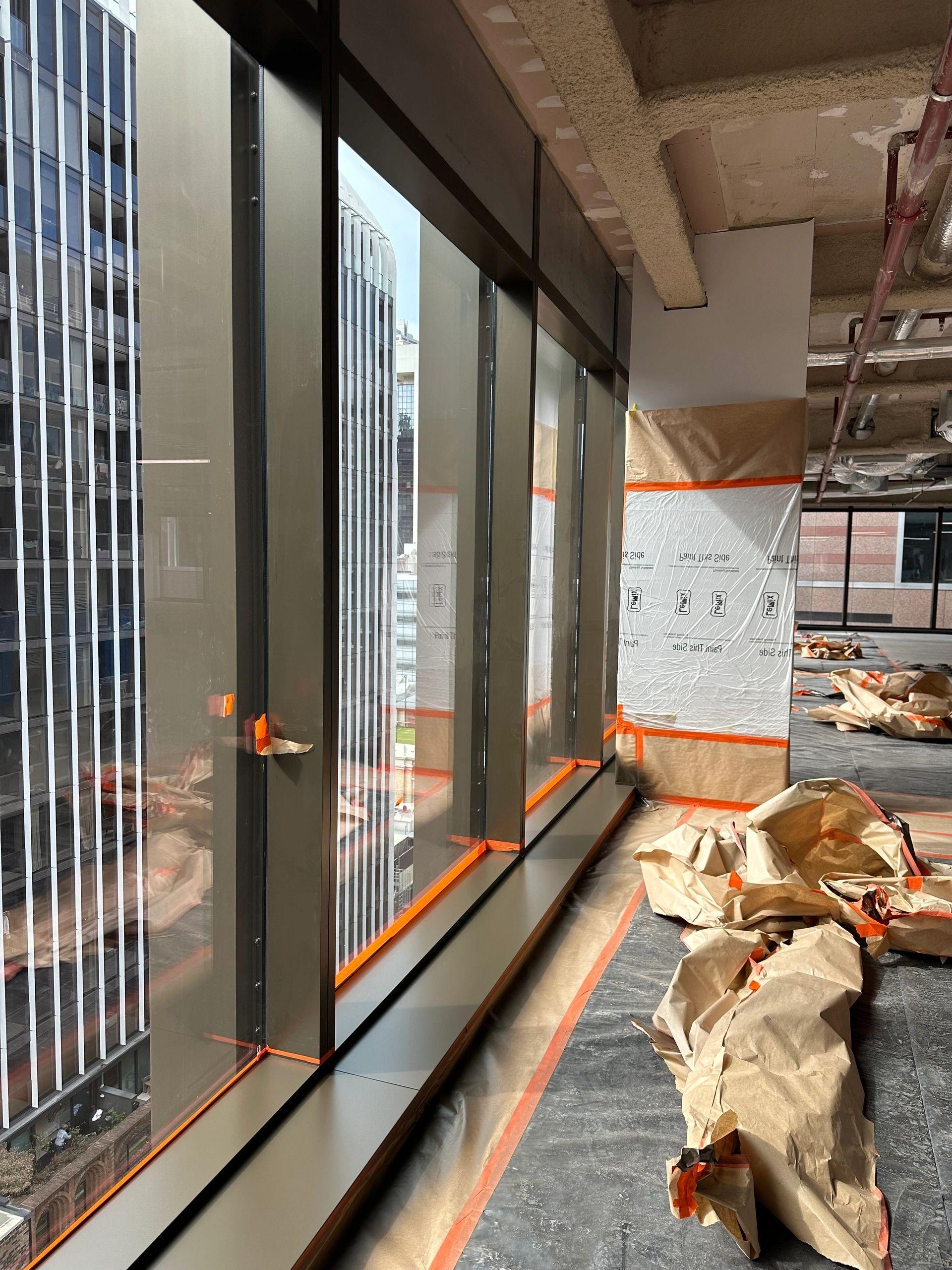
Case studies featuring this service
Service areas
Popular areas for glass rectifications
Start with a local scope page, or send us the site address and we will confirm coverage.
Questions
What builders ask us
Projects in safe hands