
Industry
Retail & Mixed-Use
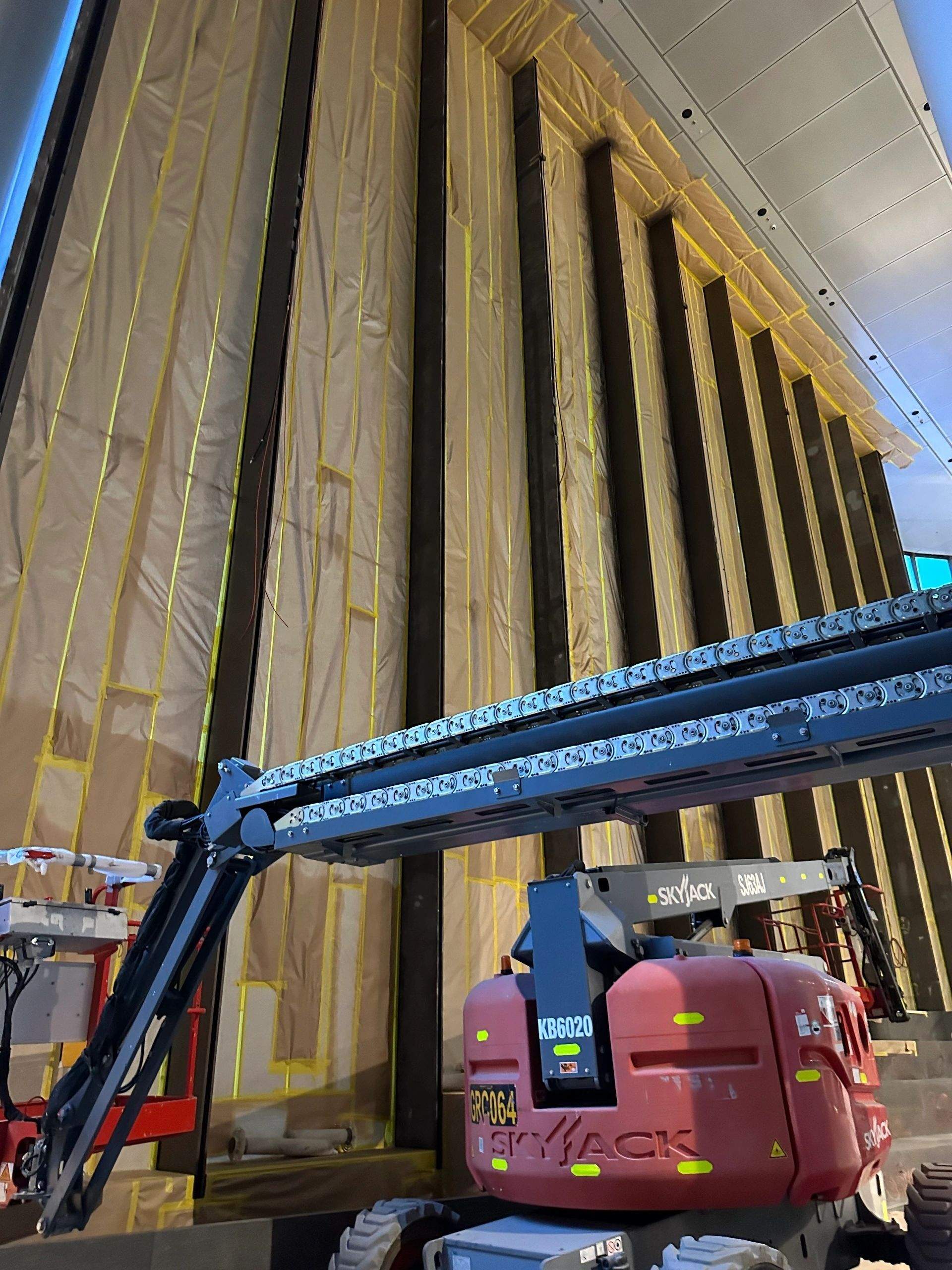
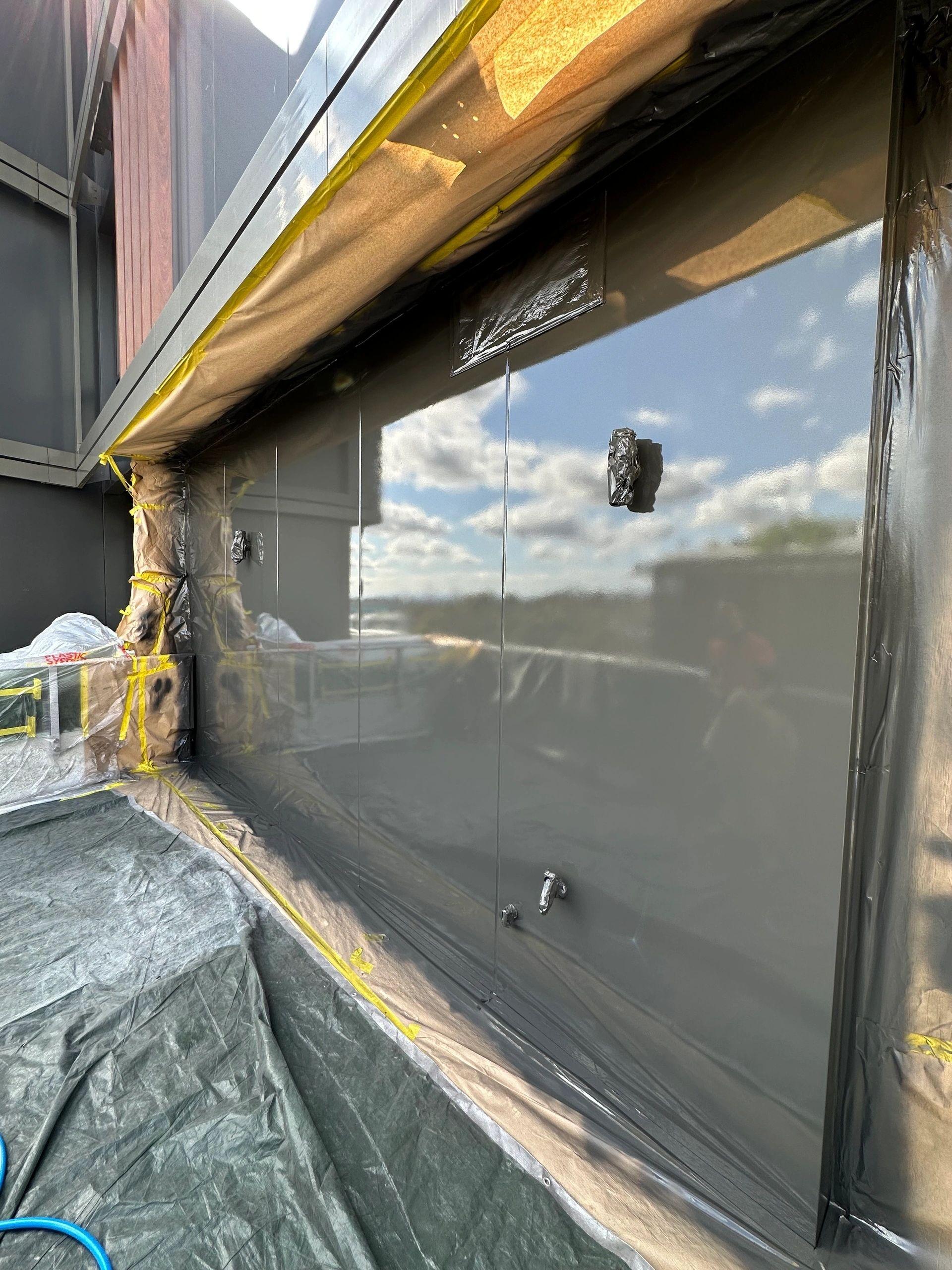
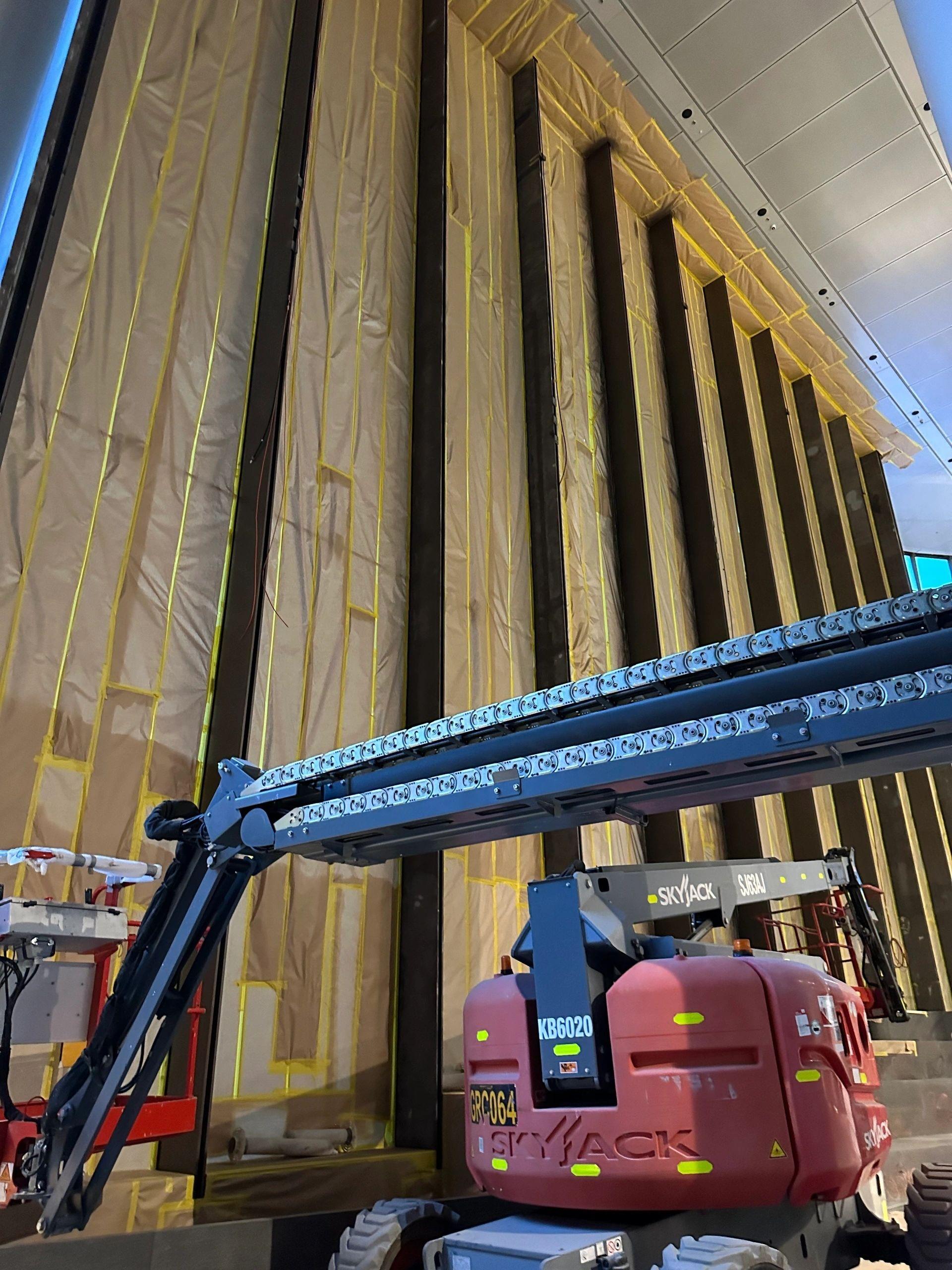
Precinct and mixed-use projects need finishing trades that work across facade, joinery and sealants in one package — the scope we delivered at Sydney Fish Market (facade rectification) and Surry Hills Village (facade rectification, French polishing and silicone).
The sector
Finishing and rectification in retail & mixed-use
Retail and mixed-use precincts are the hardest handovers to sequence because they are not one handover at all. A single precinct stacks a retail base build, tenancy shells, a public domain, and — increasingly — residential or commercial floors above, each with its own completion date, its own inspecting party and its own standard. The head contractor hands the base build and mall to the developer or centre owner; the owner hands lettable shells to retail tenants who then run their own fit-outs; the residential component goes to an owners' corporation at its own occupation certificate; and the public domain often opens to the street before anything above it is finished. The finishing scope has to be closed out in the right order, against several moving dates, not one practical completion.
The finishing and defect profile is broad and highly visible. Precincts are customer-facing by definition, so the finishes that carry them are the ones most exposed to scrutiny and to damage: glazed shopfronts and feature facades, atrium and lobby joinery, stone and large-format tile through malls and food courts, stainless balustrades, handrails, lift portals and signage surrounds, and long runs of silicone and expansion joint across large floor plates, wet areas and the base-build-to-tenancy interface. These are high-traffic surfaces installed early and then worked around by every following trade — shopfitters, services, signage, cleaners — which is exactly why they arrive at handover scratched, chipped, hard-water stained or scuffed.
The access, occupancy and programme pressures are unlike a standalone tower. Retail dates are commercial, not just contractual: lease commencement, anchor-tenant openings and trade periods such as the lead-up to Christmas are effectively fixed, and a finishing defect that holds a shopfront or a mall zone can carry liquidated damages or lost rent behind it. Much of the work happens in or beside a live environment — pedestrians moving through the public domain, tenancies already trading next to unfinished areas, and centre management restricting noisy or dusty work to night windows outside trading hours. Rectification here is routinely a night-shift, staged-access exercise rather than a clear-site one.
Multiple stakeholders inspect the same building to different standards. The developer wants the public domain immaculate for opening; retail leasing wants shells defect-free so tenant handover dates hold; a residential owners' corporation scrutinises apartment and lobby finishes at settlement; individual tenants snag their own boundaries. A finishing defect can sit across two of those interests at once — a chipped mall floor tile at a tenancy threshold is both a base-build defect and a tenant-handover blocker — so a clear record of its condition, and when, keeps the close-out straightforward.
With so many trades crossing the same visible surfaces and so many parties signing off, the questions that stall close-out are the condition of each finish and when it changed, whether it can be restored rather than replaced in a live precinct, and whether the handover record is complete. A documented, restore-first finishing package answers all three and keeps the trading dates the precinct is built around.
What makes it demanding
The handover pressures unique to retail & mixed-use
Sectional handover across several tenures at once
A precinct hands over in pieces — public domain, retail base build, tenancy shells and any residential or commercial floors above — each on its own date and to its own inspecting party. The finishing scope has to be closed out zone by zone in the right order, with defects in an already-handed-over area not disturbing one still under construction. It is a coordination problem before it is a trade problem.
Fixed trading and lease-commencement deadlines
Retail dates are commercial. Lease commencement, anchor-tenant openings and peak trade periods are effectively immovable, and a finishing defect that holds a shopfront, a mall zone or a food-court finish can carry lost rent or liquidated damages behind it. There is little float to absorb a slow rectification at the end.
Working in live, publicly accessed environments
Much of the rectification happens beside trading tenancies and moving pedestrians, or in a public domain already open to the street. Centre management typically confines noisy, dusty or fume-generating work to night windows outside trading hours, so finishing and rectification become a staged, after-hours exercise with hoarding, protection and clean reinstatement each shift.
High-traffic public-domain finishes damaged by following trades
Stone and large-format tile, glazed shopfronts, stainless balustrades and lift portals in malls, atriums and food courts are installed early and then crossed by every following trade. They arrive at handover scratched, chipped, hard-water stained or scuffed — and because they are the customer-facing surfaces, the standard applied to them is unforgiving.
Multi-party sign-off and shared-boundary defects
Developer, retail leasing, a residential owners' corporation and individual tenants all inspect the same precinct to different standards. A single defect can sit across two interests at once — a chipped tile at a tenancy threshold is both a base-build item and a tenant-handover blocker — so a clear record of its condition, and when it changed, is central to closing it cleanly.
Proof
Documented retail & mixed-use work
Also delivered on
- Harbourside
- Parramatta Powerhouse
How we deliver here
One accountable finishing team
We take the finishing and rectification scope across a precinct as one engagement rather than several. Facade rectification, French polishing of feature and lobby joinery, silicone and expansion-joint work, glass polishing, stainless-steel polishing and stone, tile and surface restoration sit under one contract, one project manager and one bundled scope. In a mixed-use build, where the retail base build, the public domain and the residential finishes above would otherwise pull in five separate trades on five separate mobilisations, that consolidation is what lets a single team follow the sectional handover from zone to zone. This is the same multi-trade package we delivered at Surry Hills Village — facade rectification, French polishing and silicone rectification across a retail, dining and residential precinct — and the facade rectification scope we delivered at Sydney Fish Market.
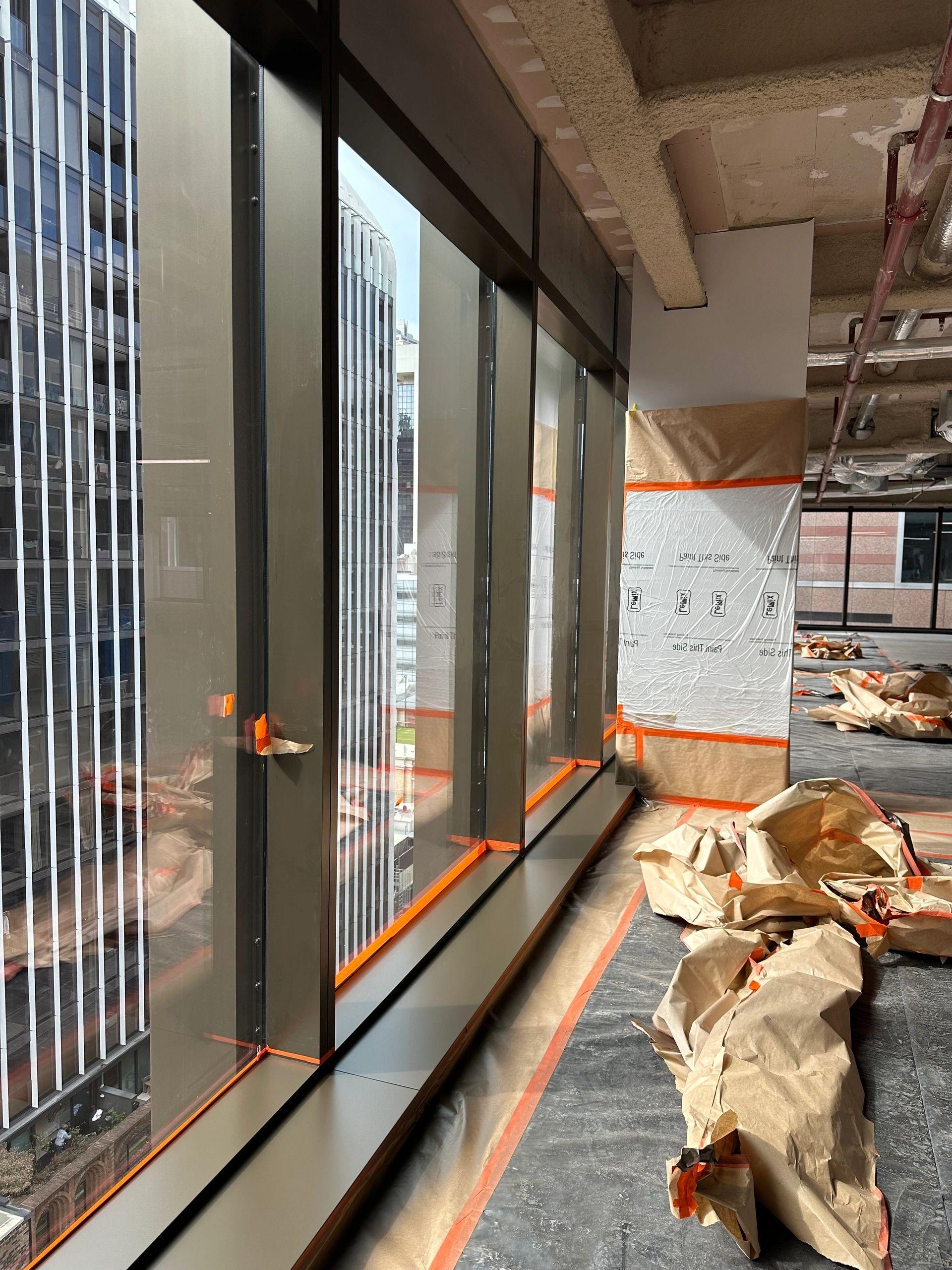
We work the way a live precinct requires. With 90+ staff across Australia, day and night shifts, and the ability to surge labour at a given point, we can run rectification in the night windows centre management allows and step up numbers as trading dates close in — so finishing keeps pace with the base build without disturbing tenancies that are already open. Where a finish would ordinarily be replaced — a scratched stone floor, a hard-water-stained shopfront, a scuffed balustrade — we restore it in place, colour-matched on site before any mass application, which avoids the lead time and disruption of reordering and refitting in a trading environment.
Documentation is what makes rectification defensible when several parties inspect the same building. Every item is captured with ITP records, live project documentation and time-stamped images held on OneDrive for the builder to view at any time. In a precinct where a defect can straddle a base-build boundary and a tenant handover, that record captures the condition of each finish and when it changed — giving each inspecting party a complete, audit-ready QA record at sign-off.
The work is delivered by project-specific trained tradespeople under quality-control managers on approved methodologies, with on-site colour matching achieved on the actual finish before it is applied at scale, and an on-site spray booth and workshop behind the field crews. For a builder, that means the customer-facing finishes a precinct is judged on — the mall floor, the shopfronts, the lobby joinery, the food-court metalwork — are closed out to standard, documented, and held to the trading dates the whole scheme depends on.
What we deliver here
The finishing scope for this sector
One team across the trades that close out a handover — engaged together, documented throughout.
Questions
Retail & Mixed-Use — common questions
Projects in safe hands