Aviation & Transport · Completed
Sydney Metro Stations
Sydney CBD, NSW
Sydney Metro is Australia's largest public transport project, and its new underground stations are threaded through the Sydney CBD as deep, permanent public infrastructure. These are high-volume interchanges built to move very large numbers of people every day, for decades. The sector they belong to leaves no slack in the finishing trades that close them out.
Transport infrastructure of this kind is unforgiving on both programme and specification. Stations are live, public and relentlessly trafficked, and the standards that apply to a landmark commercial tower apply here with less tolerance for error, because the finished environment has to perform under constant use and stay serviceable long after the ribbon is cut.
The project
What it is
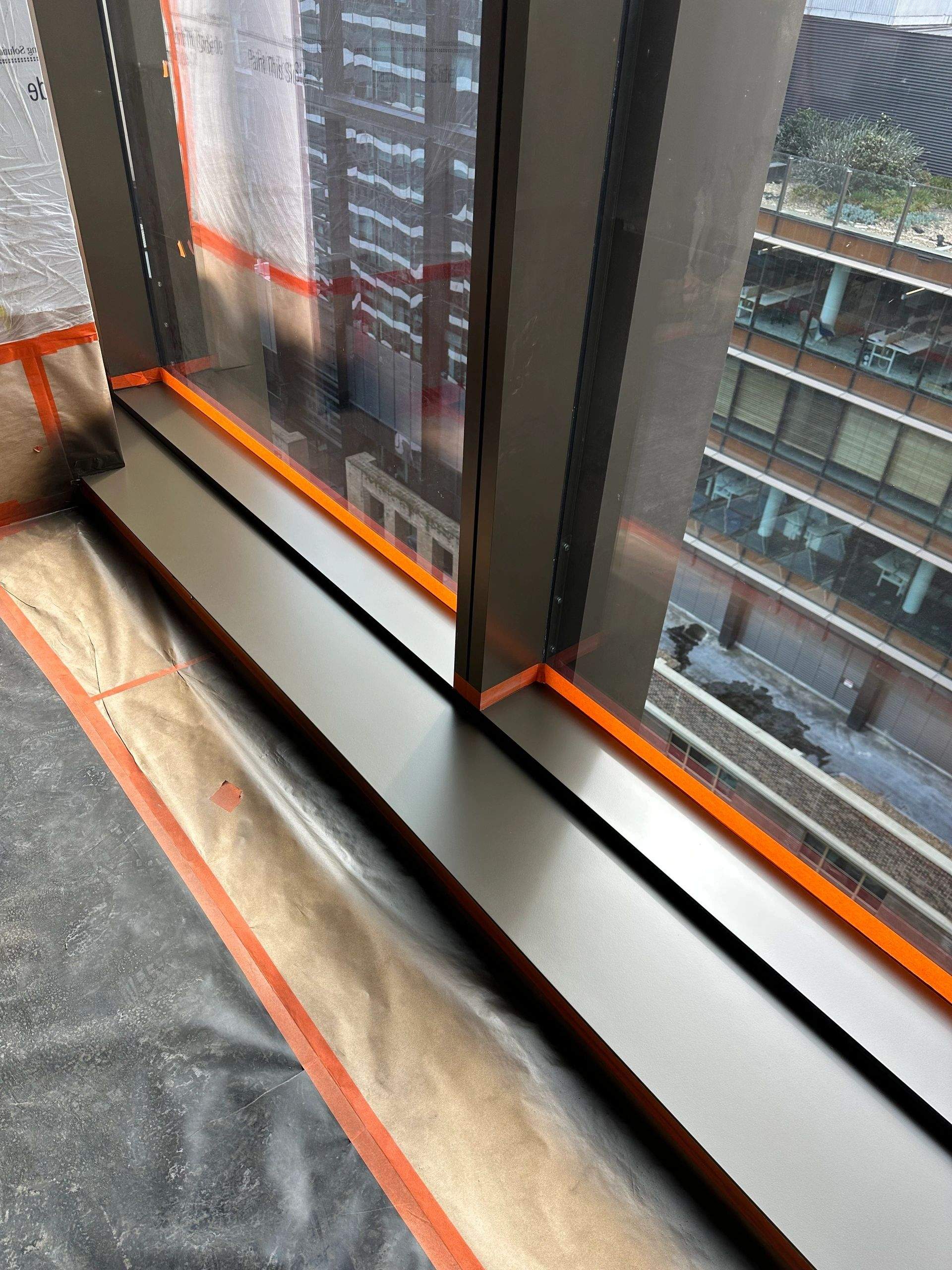
The project sits within the new underground station works of Sydney Metro in the CBD. Stations of this type bring together large expanses of stone, glass, metal and concrete, and everywhere those materials meet, or a structure has to accommodate movement, there is a joint that must be sealed. Silicone and expansion joints are small in the drawings, but they are what keeps the finished station weathertight and lets it cope with structural movement over its life.
In a station environment, that sealant work carries more than usual weight. The joints run through spaces that never close and never empty, so they take relentless foot traffic and the ordinary movement of a large structure from the moment they go in. A joint that is missing, non-conforming or failing is a defect against the weatherproofing and movement specification, and until it is resolved it sits on the register between the works and close-out.
The challenge, then, is not a one-off installation but a body of sealant work that has to be right the first time and remain serviceable well past handover. It calls for a trade that can install to specification, verify what has been installed, and put right anything that falls short, across both the small joints between finishes and the large expansion joints that let the structure move.
Our scope
What M&M delivered
M&M delivered silicone services across the Sydney Metro stations: commercial caulking and joint sealing — the installation, inspection and repair of silicone joints. It is a single, self-contained sealant scope rather than a bundle, but it covers the full life of the joint — putting new silicone in, checking joints that are in place, and rectifying those that need it — under one engagement.
The scope spans both small and large expansion joints, worked to standards of quality and durability suited to high-traffic public infrastructure. Managing the small joints between finishes and the larger structural expansion joints in the same package means the sealant line is handled consistently across the station, by the trade that understands how each type has to perform, rather than split across separate parties with separate methods.
Because installation and inspection-and-repair sit with the same team, the work is closed out as one accountable line. As standard company practice, M&M's rectification is carried out by trained tradespeople under quality-control managers and supported by ITP and time-stamped documentation available to the client — the evidence trail that lets a head contractor see what was installed, what was inspected and what was made good, without chasing it from a chain of separate trades.
The value
Why it matters
Station programmes do not move for trades. Failed, missing or non-conforming sealant is a weatherproofing and movement defect that blocks close-out, so keeping the joints on programme is part of clearing the path to practical completion. A single trade able to install, inspect and repair across the whole station removes coordination gaps that would otherwise stall sign-off.
The public, high-traffic nature of the environment raises the cost of getting it wrong. Sealant here has to be right the first time and stay serviceable long after handover, which is precisely where an inspection-and-repair capability matters: the same team that installs the joints can stand behind them, verify them and rectify them through the defects liability period, rather than the builder carrying the risk of joints no one will own.
The documentation that comes with the scope supports the builder's position as well as the finish. Time-stamped records of what was installed, inspected and made good give the head contractor a complete, audit-ready account at handover, and because they capture the condition of adjacent work before and after, they also support recovering costs where damage was caused by another trade — the difference between a defect that is demonstrably closed and one that lingers on the register.
Services on this project
More in this sector
More aviation & transport work
Projects in safe hands