Aviation & Transport · Completed
Western Sydney Airport (WSI)
Badgerys Creek, Western Sydney NSW
Western Sydney International (Nancy-Bird Walton) Airport at Badgerys Creek is Sydney's new international airport, and one of the largest infrastructure projects in the country. It sits in the aviation and transport sector, where the programme is set years ahead of practical completion and the specification governs every coated and sealed surface that carries through to opening.
An airport is public infrastructure built to open on a fixed date, in front of a travelling public that sees the envelope from day one, and it brings together large glazed facades, coated steelwork and extensive sealant lines. The finishing trades that close out that envelope work to compliance standards rather than to taste, and the handover has to be right the first time.
The project
What it is
The project is the delivery of a new international airport terminal and its surrounding works to a fixed opening. On a build of this scale, the facade panels, structural steelwork and glazed balustrades all pass through transport, storage, handling and installation before they reach practical completion. Damage picked up along that journey, or caused by other trades on a congested site, lands on the defect register and has to be closed out before the envelope can be signed off.
Facade panels arrive with powdercoat, anodised or steel finishes that a rattle-can touch-up cannot restore. Exposed steelwork needs a protective coating carried to specification, not just a cosmetic one. Expansion joints and the silicone around glass balustrades have to be installed, inspected and made good so the envelope is weathertight and compliant. Each of these scopes stands between a built airport and a handed-over one.
At an airport the stakes on that close-out are higher than on most projects. The opening date is fixed, the specification and standards are non-negotiable, and every finished surface is on show to the public. A defect list that drags, or a finish that fails inspection, is a direct threat to the date the whole programme has been built around.
Our scope
What M&M delivered
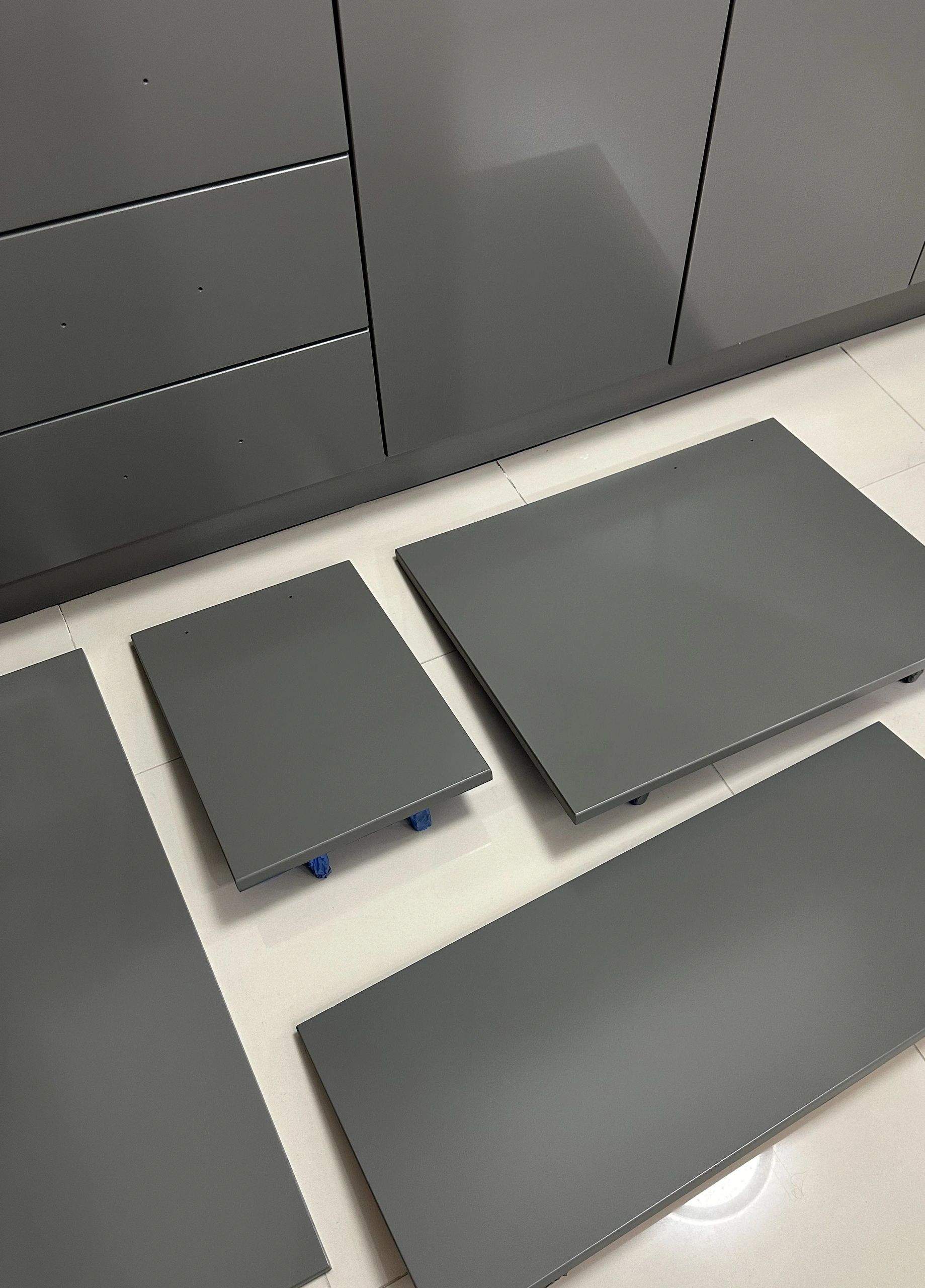
Across the airport works M&M delivered facade rectifications, steel spray painting, silicone rectifications and the silicone joints around glass balustrades under one engagement. Facade rectification restores panels damaged through transportation, installation and works by others, using procedures developed to meet industry and client standards across powdercoat, anodised and steel substrates. As standard, the method includes enclosed-area painting of polyurethanes and acrylics for a finish beyond spray-can touch-ups, with time-stamped, documented photos kept through the work.
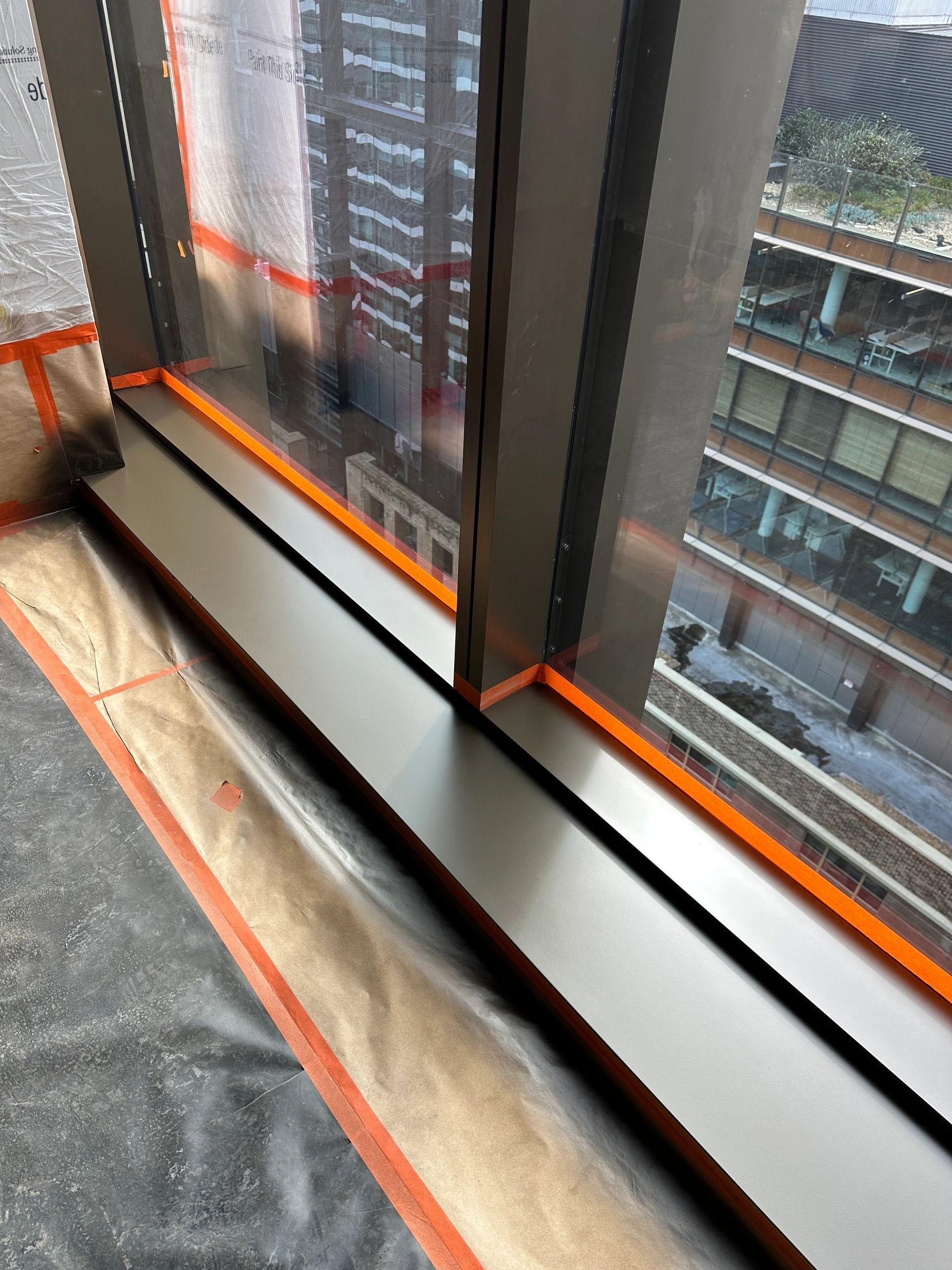
The steel spray painting is protective coating carried to the engineering specification and Australian Standards, applied to give durable, finished steel rather than a cosmetic pass. The silicone and expansion-joint sealing scope covers installation, inspection and repair of silicone joints, managing both small and large expansion joints, and extends to the silicone joints around the glass balustrades. Sealing the envelope to a standard of quality and durability is what makes it weathertight and serviceable in a high-traffic public environment.
These scopes were delivered as one coordinated team rather than a chain of single trades. As standard company practice, the work is carried out by project-specific trained tradespeople under quality-control managers, with ITP and live documentation available to the client, day and night shifts, and on-site colour matching before mass application. M&M carries work of this kind as a Supply Nation Certified services group — genuine Indigenous capability delivered to an infrastructure standard.
The value
Why it matters
Airport programmes don't move for trades. The opening date is fixed, and every finishing scope on the envelope has to be closed out before it. A specialist team that can rectify facade, coat steel and seal joints as a single package removes the multi-trade coordination gap that otherwise sits between the builder and practical completion, giving the head contractor one accountable point of contact across the finishing scope instead of several.
Restoring finishes in place, rather than replacing them, protects both programme and budget. A replacement panel means reordering, re-delivering and reinstalling on a site that has no slack in its sequence; rectification in place keeps the panel, the programme and the specification intact. Coatings carried to engineering specification and Australian Standards give the builder a compliance position that will stand up at inspection.
The documentation carried through the work matters just as much. Time-stamped, documented photos and inspection records give the builder a clear, traceable account of the condition of each surface and the work done to it, which is exactly what a compliance-driven handover relies on. Combined with the ability to add labour at any point to hold the date, that is what a fixed-programme close-out demands.
Services on this project
More in this sector
More aviation & transport work
Projects in safe hands